
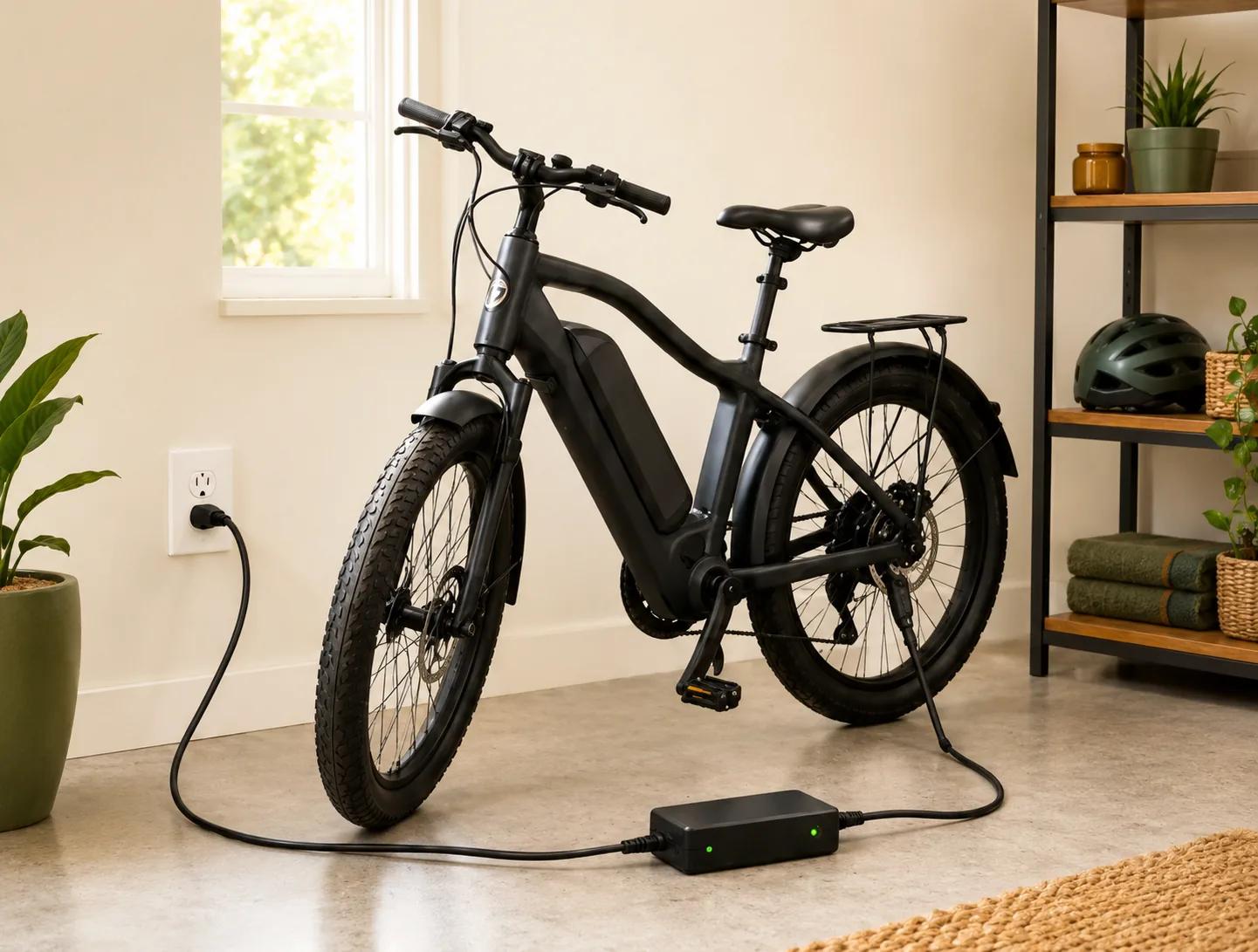
1. Use the Right Charger
Only use the charger supplied with or recommended by the manufacturer.
OFFICIAL WSDOT E-BIKE PROGRAM
Eligible Washington residents may qualify for a $300 rebate or a $1,200 income-qualified rebate.
Guide
Safe charging starts with good habits. Knowing how to charge, store, and maintain your battery helps protect both your ride and your home.
Lithium-ion batteries power most modern e-bikes.
Charging systems are designed to work as one complete system.
Good charging habits help protect your home and community.
Stay informed, follow guidance, and ride with confidence.
Follow these basics every time you charge.
Only use the charger supplied with or recommended by the manufacturer.
Avoid charging while you are sleeping or away from home.
Never use altered battery packs or batteries repaired by unqualified personnel.
Every battery system has specific charging and storage guidance.
When available, choose systems evaluated to UL 2849, which evaluates the electrical drive system, battery, charger, and related components as a system.
Review current CPSC recalls and manufacturer safety notices before continuing to use recalled products.
Myth
Any charger will work.
Reality
Use only the charger recommended by the manufacturer. The wrong charger can damage the battery and create unnecessary risk.
Myth
A replacement battery is always fine.
Reality
Compatibility and safety certification matter. Always use approved batteries designed for your specific bike.
Myth
Every battery fire happens because someone used the wrong charger.
Reality
Battery incidents can have multiple causes. Following manufacturer guidance and staying informed helps reduce avoidable risks.
Use this quick checklist every time.
Trusted information from official organizations.
Product recalls, safety guides, and consumer information.
Learn about UL 2849 and how e-bike electrical systems are evaluated for safety.
Lithium-ion battery and home fire safety resources.
Check your bike or battery manufacturer website for manuals, support, and safety updates.